Skip to content
Yachtwebsite Information About Yachts

YACHTWEBSITE Journal

Understand the yacht. Then make the decision.

We hold no inventory and take no commission — how a hull is put together, what separates the five classes, and the three things a listing can never prove.

Publication
YACHTWEBSITE
Purpose
Yacht information
Position
Independent
Scroll

No inventory. No commission. No hidden role.

Most of what is written about yachts is written by someone with a boat to move. That is not a criticism — it is simply a different job from this one. Because nothing here is for sale, the writing is free to say that a class is wrong for you, that a season is badly chosen, or that a question has no clean answer.

The site is educational. It does not broker charters, list vessels, hold client funds or introduce buyers to sellers. When a page describes a shortcoming, no revenue depends on you ignoring it.

A specification is a claim. A survey is a finding. Only one of them is written by someone with nothing to gain. On reading a listing
Read the fleet comparison

Anatomy of a motor yacht

01 / 07

YACHTWEBSITE · ILLUSTRATIVE PROFILE PROJECT YACHTWEBSITE STATUS EDUCATIONAL STUDY SCALE NOT TO SCALE DRAFT · VERIFY ON SURVEY
00 — The plate

A hull, drawn first

Every serious conversation about a yacht starts at the profile, because the profile is where the compromises are visible. Length buys volume, beam buys stability, draft buys sea-keeping and costs you anchorages. Scroll on and the drawing takes itself apart.

01 — Forward

The bow and its flare

The stem is close to plumb: it buys waterline length, and waterline length is what sets the speed a displacement hull can hold without fighting its own wave. The flare above it throws spray outward instead of over the foredeck — the difference between a dry passage and a wet one.

Buys
Waterline, dry decks
Costs
Interior volume forward
02 — The sheer

One line that dates a boat

The sheer is the curve of the deck edge from stem to transom, and it is the single line most responsible for whether a yacht looks right. A rising sheer forward keeps the bow out of the water and reads as traditional; the flat sheer of the last two decades buys volume and interior headroom, at the cost of that lift.

Read it for
Era, intent
Not for
Build quality
03 — Below the line

Draft decides where you sleep

The depth from waterline to the lowest point of the hull — the specification most likely to change your holiday. Deeper is steadier in a seaway; shallower lets you into the bays and creeks the deep boats only read about.

Deep
Sea-keeping
Shallow
Anchorages
04 — Main deck

Where the week is actually spent

Saloon, dining and usually the galley, set low where motion is least. The window band is not only a view: on a well-drawn boat the glass is deep enough to hold the horizon while seated, which is what actually keeps people comfortable.

Motion
Lowest aboard
Check
Seated sightline
05 — Flybridge

The deck that sells the boat

An upper helm, shade, and the deck most people picture when they picture a yacht. It is also the highest weight aboard, so its size is a naval-architecture decision before it is a lifestyle one. The mast sets the air draft — which decides the bridges you can pass.

Gains
Deck, view
Costs
Stability, air draft
06 — Aft

The garage and the beach club

The volume aft holds the tender, the toys and, increasingly, a platform that folds down to the sea. It is the part of the boat that changes a week the most and the part least visible in photographs — so ask what actually fits, whether launching needs calm water, and how long the crew take to put it all away.

Ask
Tender length
Ask
Sea state to launch

The five classes

Five ways to be at sea

Due diligence

Three things a listing cannot prove

A specification sheet is a description written by an interested party. None of the three questions below can be settled from it, and all three decide whether the week or the purchase goes well.

  1. I

    The boat described

    Photographs are chosen, and often years old. Refits change layouts; a new owner changes the tender; a bad season changes the crew. What is written is the boat as someone wants it understood — a survey, a recent condition report or a physical visit is what tells you the boat as it is.

  2. II

    The people involved

    On charter, the crew make or break the week far more than the hull does. Ownership adds brokers, managers, yards and flag administrations. Ask who is actually a party to your agreement, who holds your money, and under which jurisdiction — before anything is signed.

  3. III

    The agreement

    Delivery and redelivery, fuel, the advance provisioning allowance, cancellation, insurance and what happens when weather forces a change of plan — these sit in the contract, not the brochure. Read the clause that describes a bad outcome; it is the one that matters.

Method

A calmer way to research a yacht

  1. 01

    Define the use before the boat

    Write down the number of guests, the nights aboard, the water you want to be in and the tolerance for motion. Almost every disappointing charter traces back to a boat chosen before the use was honest.

  2. 02

    Compare like with like

    Length alone tells you very little. Compare guest cabins, beam, draft, year of last refit and crew count together, or you are comparing a marketing number against a different marketing number.

  3. 03

    Verify independently

    Condition, class status, flag and ownership are all matters of record. A surveyor or a maritime lawyer works for you; a listing does not. On a purchase this is not optional, and on a long charter it is cheap insurance.

  4. 04

    Agree it in writing

    Use a recognised form of agreement, read the cancellation and weather clauses, and confirm where client funds are held. If a term is explained verbally but not written, it does not exist.

0m

Where superyacht rules begin

0

Classes compared

0

Cruising grounds covered

0%

Commission taken

Asked often

Answered plainly

  1. Q

    What does a yacht charter actually include?

    Usually the vessel, her crew, insurance for the boat and basic equipment. Fuel, food, drink, berthing and taxes are commonly separate and paid from an advance provisioning allowance. Always confirm which convention the agreement follows.

  2. Q

    How far in advance should a charter be booked?

    For peak Mediterranean or Caribbean weeks, six to twelve months is normal for the better-known boats. Shoulder season can be arranged far more quickly, and often more pleasantly.

  3. Q

    Does YACHTWEBSITE arrange charters or sales?

    No. We do not broker, list, hold funds or take introductions. The site is educational, which is precisely what lets it describe a class or a season unfavourably.

  4. Q

    Motor yacht or explorer yacht?

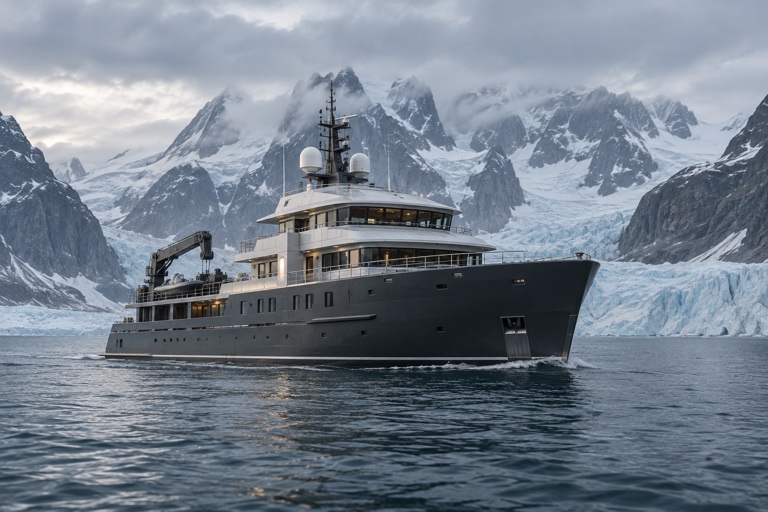
    An explorer is built around range, stores and sea-keeping — heavier, slower, designed to be self-sufficient. If the plan is a week between known harbours, a motor yacht is the better and cheaper answer.

  5. Q

    Why are there no prices?

    Because any number here would be out of date and would imply we can transact. Rates move with season, availability, itinerary and the boat's own history.

Before the conversation

Research first. Then talk to someone who sells.

Bring the questions from this page to whoever you deal with. A good broker will welcome them; the reaction itself tells you something.

Ask a question